Iran's Military Strategy — Crisis Escalation: The Strait of Hormuz and an Unprecedented Energy Crisis.
Iran

Iran's Military Strategy — Crisis Escalation: The Strait of Hormuz and an Unprecedented Energy Crisis.
The current geopolitical situation in the world could trigger a global energy crisis. What was called a "shadow war" between Washington and Tehran for years transitioned into a phase of open, full-scale armed conflict on February 28, 2026. The military campaign, dubbed "Epic Fury" by the US, began with sudden, massive US and Israeli airstrikes on Iran's strategic, military, and nuclear facilities. Iran's retaliatory strikes against the US and Israel and the rejection of measured responses in favor of unrestrained escalation point to a prolongation of the war.
Assessments of the causes of the war among research institutions vary drastically depending on geography and political orientation. Most likely, Iran wants to secure its place in the emerging regional and global order, while the US is left to prevent this. Experts emphasize that the Donald Trump administration aims not just to weaken Iran, but to completely destroy its nuclear potential (according to reports, Iran was weeks away from building a bomb) and dismantle the infrastructure of the "Axis of Resistance" in the region. The US-Israeli coalition successfully completed the first phase of the campaign. Iran's air defense system was suppressed, command and control were disrupted, and Iran's capacity to launch ballistic missiles dropped by 90% (from 350 launches on the first day to about 25 by mid-March).
However, from the very first days, it was evident that Iran had learned the lessons of previous conflicts, especially after the Twelve-Day War in June 2025. Tehran's military strategies include both functional escalation—geographical expansion through the "Axis of Resistance"—and hierarchical escalation—transitioning from proxy forces to direct strikes. Given that they lost the first phase of the conflict, their main trump card now is to prolong the conflict to balance the forces. Consequently, the US expended a colossal amount of Tomahawk cruise missiles and guided aerial bombs in the first weeks of the war. US missile defense systems are also being depleted. The active use of THAAD and Patriot interceptors in the Middle East creates dangerous gaps in the Indo-Pacific region.
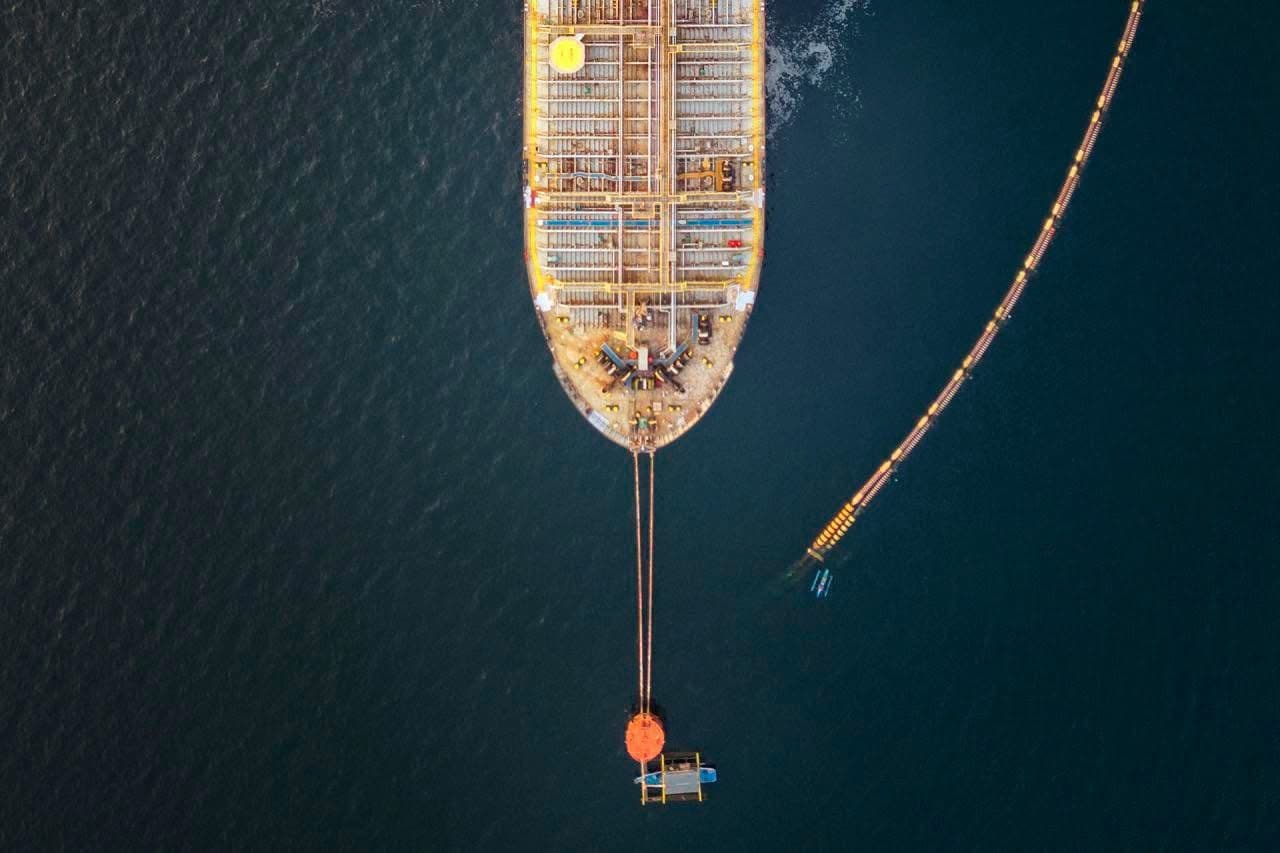
Europe's Economic Security European countries do not become players in any conflict until there is a clear winner. But in this conflict, they are becoming hostages of their own economic policy. Many European countries rely on energy imports from the Persian Gulf states. After pivoting away from Russian energy resources, Europe increased its purchases of liquefied natural gas (LNG) and therefore shifted to the Persian Gulf countries. Incidentally, the Middle East accounts for over 30% of global oil production. Oil and petroleum products accounted for about 67% of total EU energy imports at the end of 2025. The current status of the Strait of Hormuz is a clear example of Europe's dependence. As of March 26, traffic through the strait plummeted by 95%: instead of the usual 140 vessels, only 4-5 are passing through. We see the consequences of this in rising energy prices, which will directly hit the industrial countries of Europe, particularly Germany.
Furthermore, they cannot protect their businesses from American pressure. European multinational companies and banks are deeply integrated into the American financial system. Due to secondary sanctions from Washington, major European players are forced to leave the Iranian market, losing multi-billion dollar contracts and investments. Even the creation of the European INSTEX mechanism to facilitate legitimate trade with Iran in 2019 did not help. All of this not only deals a blow to the European economy but also makes independent European economic diplomacy in the Middle East extremely difficult.
USA: Focus on Total Domination Since the beginning of the conflict, Washington's goals have shifted, but one goal has remained unchanged. As of March 26, 2026, it can be said that the US and Israeli coalition has won a crushing victory from a tactical and military-technical perspective. The proper division of tasks in this conflict played an important role. Israel, using F-35I Adir stealth fighters, focused on eliminating the country's top elite and destroying the remnants of the nuclear program. Meanwhile, the US, employing B-2 Spirit strategic bombers and massive missile strikes, systematically destroyed Iran's navy, air defense systems, and ballistic missile production plants.
The coalition's tactics were highly effective in the early days. Using such tactics, the US demonstrated that it had learned lessons from Iraq. This is evidenced by the speeches at briefings by Secretary of Defense Pete Hegseth. He repeatedly stated: "This is not Iraq. This is not an endless war. We will end this only on 'America First' terms." The US has always viewed conflicts favorably, but not often decisively; however, in this conflict, the White House is decisive for the first time. Nevertheless, decisiveness is not a guarantee of 100% victory. The events of the conflict show that the US did not even consider that the conflict could drag on. The Trump administration believed that if the ruling elite were eliminated, systemic chaos would ensue. Indeed, after the elimination of the ruling elite, many global experts thought there would be regime change, but there was only a change of leadership. The US misunderstood Iran's psychology, assuming that it would capitulate under pressure, but Iran retaliated and thereby prolonged the conflict.
Iran: The Strategy of "Asymmetric Strangulation" German Chancellor Friedrich Merz, at a recent G7 summit in France, openly criticized Washington and Jerusalem. According to many Europeans, the US executes tactical attacks excellently but is sinking deeper into a conflict without understanding who will govern a 90-million-strong Iran after a potential regime collapse. Iran is unlike any other country in its psychology; despite having many internal political disagreements, they fight back after the loss of their top leaders. Iran possesses mechanisms of influence in the region, and they use them very effectively.
The strategy of "asymmetric strangulation" does not imply open fire. Instead of a direct clash, Tehran uses cheap methods to suffocate the global economy and enemy logistics. The strategy is based on several key actions. The financial blockade of the Strait of Hormuz: Iran does not need to physically block the strait with mines and ships. It is enough to create unacceptable commercial risk. Due to the instability and damage to several ships, shipowners are not sending cargo because insurance companies refuse to insure them. Thus, the strait effectively becomes "closed." There are also less effective, but still viable, backup bypass routes around Hormuz. One is the Habshan-Fujairah pipeline (ADCOP) built by the United Arab Emirates, which allows oil from Abu Dhabi's fields to be transported directly to the port of Fujairah on the coast of the Gulf of Oman, completely bypassing the Strait of Hormuz; and the East-West pipeline (Petroline) built by Saudi Arabia—a 1,200 km highway crossing the entire Arabian Peninsula, delivering oil from fields in the east to the port of Yanbu on the Red Sea coast. Iran, using its proxy networks, such as Hezbollah in Lebanon and the Houthis in Yemen, already temporarily restricted these routes several times in 2019. Just as it does now, by making backup ports as dangerous as the strait itself, Iran deprives the West of alternatives. The remaining safe routes operate at the limit of their capacity and cannot compensate for the losses.
Comments (0)
No comments yet. Be the first!
Related posts
"Strategic Discourse" Centre Takes Part in DGAP Panel Discussion on Digital Influence and Public Diplomacy
Iran After Khamenei

"Strategic Discourse" Center Participates in "Entangled Histories" Conference at GIGA