The strategic confrontation between the United States and China on the example of Latin America

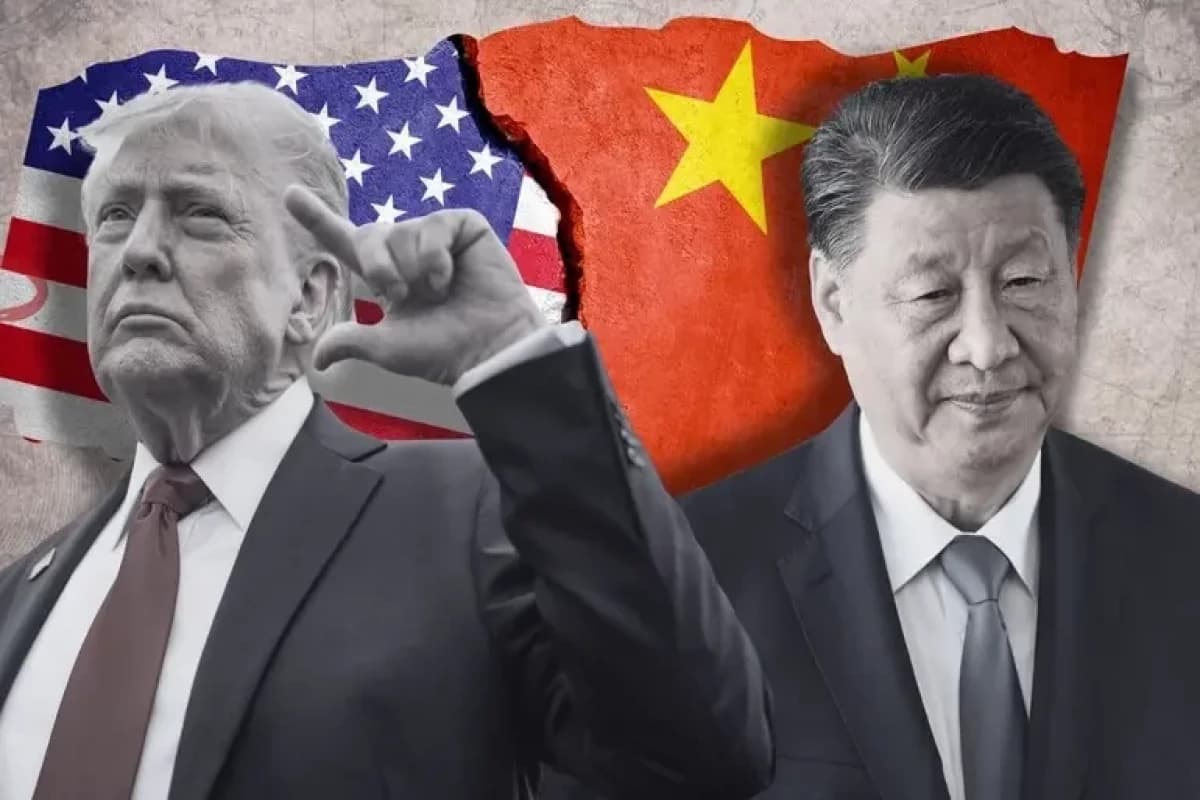
In global trade, Latin American countries have long specialized in supplying raw materials and food. Back in the 19th century, Latin American nations actively entered global trade as major suppliers of these resources, but the development trend of Latin American countries has changed significantly since 2001. Latin America has always been within the sphere of interest of hegemon states. The US, China, and the European Union have held immense influence over Latin American trade. Looking at the results from 2001 to 2018, we can see that the shares of these hegemons changed frequently: for instance, the US share in trade with Latin American countries dropped from 51% to 37.2%, the European Union's from 13.9% to 11.9%, while China's share grew from 2.2% to 15.2%.
This trend not only persisted but intensified significantly by 2024–2026. China has firmly established its status as the top trading partner for most South American countries, while the US maintains its leadership primarily in Mexico and Central American countries thanks to the USMCA agreement. With Donald Trump coming to power, the balance of power shifted slightly. Trump views North and South America as an exclusive zone of interest for the United States, and this will become a defining feature of 2026. Thus, a military strike on Venezuela leaves the political situation in the country in limbo, while the US President unleashes a barrage of threats against other nations—from Colombia to Cuba and Mexico.
At the same time, despite all US threats, China continues to strengthen its ties with Latin America. For instance, in its new strategy in December 2025, the PRC government published its third policy paper on Latin America and the Caribbean. One of the top priorities for 2026 is Beijing's promotion of the "inclusive multipolar world" concept to position itself as an alternative to US "hegemony." Knowing that industry accounts for the largest share of GDP in most Latin American countries, China is playing the long game. China has moved away from issuing large state loans, focusing instead on foreign direct investment in strategic sectors. Chinese companies seek to secure dominance in the "Lithium Triangle" (Argentina, Bolivia, Chile), which is vital for global battery production. Furthermore, assembly plants and service networks for Chinese automotive brands are being actively built in Brazil and Mexico.
How will Latin America's relations with China develop?
Since Xi Jinping came to power, China has been actively expanding its influence in Latin American countries. Before Xi Jinping, China used an investment model with simple trade contracts and early state loans, avoiding direct competition with the US. After he took office, the clearest indicator of rising Chinese "soft power" in the region became the integration of Latin America into the Belt and Road Initiative (BRI).
Granted, when launched in 2013, the BRI project was aimed exclusively at Eurasia and Africa. However, in 2018, Beijing officially declared Latin America a "natural extension" of the Maritime Silk Road, definitively cementing its global ambitions. Today, more than 20 Latin American and Caribbean countries have signed memorandums of understanding to join the BRI, demonstrating China's special interest in the region.
Continuing this strategy, in December 2025, the PRC government published its third policy paper on Latin America and the Caribbean. Crucially, the Chinese strategy was published just days after the release of the US National Security Strategy. A key aspect of the new US strategy is the virtual resurrection of the nearly 200-year-old Monroe Doctrine, which declared the Western Hemisphere an exclusive sphere of influence for the United States. Naturally, China’s approach to the region shifted from resource opportunism to long-term strategic integration.
According to Florida International University (FIU), China is already the first or second-largest trading partner for most countries south of Mexico and behaves as a confident global power ready to compete openly with Washington in the Western Hemisphere.
The tightening of US control over the Panama Canal in 2025 gave a negative impulse to China's plans. Despite this, researchers from European institutes draw special attention to the Chancay megaport in Peru, launched with the participation of Chinese capital. In 2026, it is definitively changing the rules of logistics, rerouting trade flows between Asia and South America to bypass the Panama Canal and US ports.
All these actions by competing powers complicate the situation in Latin America. Many states will not be able to remain neutral forever; they will have to navigate between tight US security demands and enticing economic offers from China.
The Left vs. Right Struggle: Elections in Brazil
Presidential elections are set to take place this October in Brazil, one of the leading middle powers. Given the age and health condition of incumbent President Luiz Inácio Lula da Silva, as well as the judicial ban on Jair Bolsonaro's participation in elections, the political landscape remains highly volatile. The success of social programs, inflation control, and GDP growth rates will be the main arguments in the upcoming race. The current state allows us to view the upcoming elections through the prism of fiscal discipline and great power competition.
Brazil is a member of the BRICS group and joins forces with Russia, India, China, and South Africa to counter US dominance in global politics and finance. The United States will seek to limit Brazil's role on the world stage using leverage. For instance, in 2019, Brazil received "Major Non-NATO Ally" status. The US can manipulate this status by freezing access to advanced military technologies, canceling joint Southern Command exercises, or restricting funding for training programs for Brazilian officers.
Amid political turbulence in the hemisphere, Brazil strives to act as the primary systemic conduit for South American interests in multipolar institutions. After hosting the UN Climate Change Conference (COP30) in Belém in late 2025, Brazil positions itself as a global environmental power. The BRICS New Development Bank plays a critical role in financing projects in renewable energy, sustainable agriculture, as well as initiatives to protect the Amazon and transition to a low-carbon economy. This requires colossal investments, which Western funds provide reluctantly or on unfavorable terms.
For the Trump administration, it is critical how willing Brazil's future leader will be to cooperate on regional security and containing the influence of extra-regional players. To this end, Washington prioritizes maintaining stable channels of communication with both the center-left establishment and moderate right-wing forces to ensure the continuity of strategic dialogue regardless of the election outcome. For instance, Washington is known to be already building privileged communication channels with the government's macroeconomic bloc, which advocates fiscal responsibility and requires access to Western capital markets.
The country's future leader, regardless of political affiliation, will continue the policy of active maneuvering between Washington and Beijing. Growing global polarization leaves the future president of Brazil with less and less room for comfortable neutrality.
Venezuela After Maduro: A New Stage for Maduristas and Chavistas
Current changes in the state apparatus, security sector, and judicial system indicate a new US strategy. Washington has chosen a different path compared to the war in Iraq, where after the overthrow of Saddam Hussein, all members of his Ba'ath party were barred from holding public office, which led to a political vacuum filled by forces outside US control.
Going forward, US management of Venezuela will obviously be built on a "carrot and stick" policy, as current Maduristas are ready to cooperate, and the Trump administration plans to control the country through indirect rule. Under this format, the US retains the capability to pressure all spheres of Caracas's development. Warships still sit off the coast of Venezuela, retaining the ability to block oil exports if necessary. Washington is also expected to apply a strategy of "conditional engagement"—a metered lifting of restrictions on Venezuelan oil exports in exchange for steps toward demilitarization and reforms.
However, the current elite in Caracas also retains leverage over the US. Under indirect control, the United States depends on local elites for the direct management of the country, and the Venezuelan side can successfully use this factor in bilateral negotiations.
Musabey Babaev - Head of the Americas and Europe Department at the Baku Club of Political Scientists, Chairman of the "Strategic Thinking" Diplomacy Center, and Research Intern at Leuphana University.
Comments (0)
No comments yet. Be the first!
Related posts
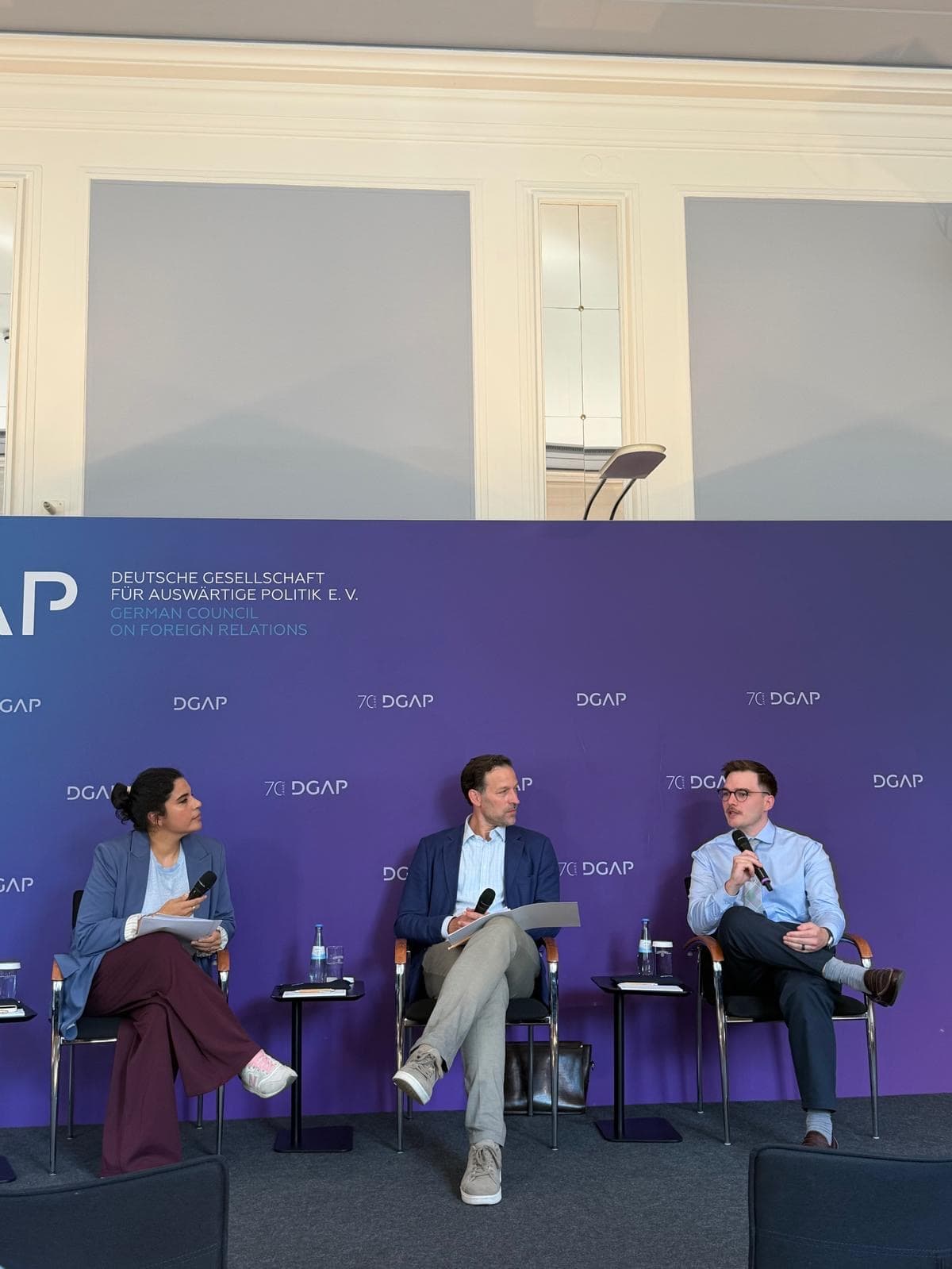
"Strategic Discourse" Centre Takes Part in DGAP Panel Discussion on Digital Influence and Public Diplomacy
Iran After Khamenei
"Strategic Discourse" Center Participates in "Entangled Histories" Conference at GIGA