
Iran After Khamenei

Iran After Khamenei
Power Dynamics and Institutional Transition Scenarios
Mehriban Cherkezli
Chief Advisor of the “Strategic Discourse” Student Diplomacy Centre
Abstract
This article examines Iran’s political trajectory following the assassination of Supreme Leader Ali Khamenei on 28 February 2026 and asks whether a change at the apex of the system produces a transformation of the political order or a further consolidation of the existing model of governance. Rather than concentrating on the identity of the successor, the analysis places the institutions of the Islamic Republic — the Islamic Revolutionary Guard Corps (IRGC), the Office of the Supreme Leader, the Supreme National Security Council (SNSC), the clerical establishment of Qom, and the Basij — at the centre of the discussion. The paper reconstructs the succession sequence of March 2026, assesses the legitimacy deficit generated by a father-to-son transfer of power in a system founded on the rejection of dynastic rule, and traces the external environment in which the new leadership operates: the collapse of the June 2026 Islamabad Memorandum, the reimposition of the naval blockade, and the contest over the Strait of Hormuz. It also considers domestic economic pressure and the limits of Iran’s network of allied forces. The article argues that the post-Khamenei order is best described not as continuity but as continuity under coercion: the state has preserved its institutional shell while the balance of power inside that shell has shifted decisively towards the security apparatus. It further argues that this shift narrows rather than widens the space for negotiated outcomes.
Keywords
Iran, Khamenei, Mojtaba Khamenei, power transition, Islamic Revolutionary Guard Corps, succession, legitimacy, Strait of Hormuz, naval blockade
Iran After Khamenei: Power Dynamics and Institutional Transition Scenarios
Introduction
On 28 February 2026, Ali Khamenei, the second Supreme Leader of the Islamic Republic of Iran, was killed in an air strike on his residence in Tehran. The strike was carried out by the Israeli Air Force with United States military and intelligence support, and the Iranian government confirmed his death on 1 March. More than forty members of the country’s military and political leadership were killed in the same operation, among them the IRGC commander Mohammad Pakpour.
The abrupt end of a leadership that had lasted thirty-seven years marks Iran’s first experience of a succession since 1989. What makes it unprecedented is that it occurred during an active military conflict and against the background of mass losses among the senior leadership.
The question we set for this analysis is the following: does a change at the top of the system lead to a transformation of the political order, or to a further consolidation of the existing model of governance?
Our answer is neither the first nor, in any simple sense, the second. The formula that describes post-Khamenei Iran is not “continuity” but continuity under coercion. The state has preserved its institutional shell, but the balance of power inside that shell has shifted decisively in favour of the security apparatus. This shift does not widen the space for a negotiated settlement but narrows it.
1. The Succession Sequence: Clarifying the Facts
In the first weeks the sequence of events was seriously distorted both in the international media and in the regional analytical space. For this reason we begin with a clarification of the facts.
After Khamenei’s death, an Interim Leadership Council was formed in accordance with Article 111 of the Constitution. Established on 1 March, the Council consisted of President Masoud Pezeshkian, Judiciary Chief Gholamhossein Mohseni-Ejei, and Ayatollah Alireza Arafi, a member of the Guardian Council. The Council operated from 1 to 8 March.
During this period, claims that Arafi had been killed in an air strike circulated on social media and in some Israeli media outlets. Among those who spread the claim was Michael Flynn, the former United States National Security Advisor. However, neither the United States, nor Israel, nor the Iranian government confirmed this information, and no international news agency verified it independently. The available evidence indicates that Arafi continued to serve on the Interim Leadership Council throughout its existence. All of this shows how unreliable the information environment becomes in wartime, and how easily initial reports pass into analytical texts without verification.
On 8 March the Assembly of Experts elected Khamenei’s second son, the 56-year-old Mojtaba Khamenei, to the office of Supreme Leader. The selection process was closed, and statements by members of the 88-seat Assembly contradicted one another. Uncertainty about the new Supreme Leader’s physical condition persisted for months. He did not appear in public for a long period after his appointment and conducted his communication in writing and through intermediaries. The first video recording was released only in August 2026, and even then the date of filming was not disclosed.
2. The Background to the War and the Limits of Causal Explanation
The hardening observed in United States regional policy at the beginning of 2026 shaped the context of the operation against Iran. On 3 January, the United States conducted a military operation in Venezuela, seized President Nicolás Maduro and his wife, and transported them to New York on narco-terrorism charges. The operation did not proceed without resistance: there were significant losses among Venezuelan servicemen and among the Cuban security personnel involved.
Drawing a direct causal link between these two events requires caution. Although Iran and Venezuela are both targets of United States sanctions policy, their weight in China’s energy supply is not the same. In 2025, 62 per cent of China’s crude oil imports came from Russia, Saudi Arabia, Malaysia, Iraq and Brazil. According to tanker-tracking data, the volume of sanctioned oil that does not appear in official statistics reaches 2.6 million barrels per day; of this, 1.38 million barrels belong to Iran and 389,000 barrels to Venezuela. In other words, Iran’s position in the Chinese market is indeed that of the second-largest supplier, but Venezuela does not rank first by any measure.
A substantial share of the crude that enters Chinese customs statistics as Malaysian is Iranian oil transferred ship-to-ship in Malaysian waters, so the two lines are less cleanly separated than the official tables suggest. Iran’s real weight in the Chinese market is therefore higher than customs returns show, but this also means that any comparison with Venezuela must be drawn from tanker-tracking data rather than from customs figures.
The Venezuela operation demonstrated to Washington that the political price of treating a head of regime as a direct target was lower than expected, and this experience lowered the threshold for decision-making with regard to Iran. The nuclear programme and the factors of regional deterrence constitute the substance of the operation itself.
The strikes were delivered while the Iran–United States talks that had been under way since 6 February were still in progress. The military confrontation was therefore not the consequence of a failure of negotiations but the cause of their termination. The negotiating table is no longer regarded as a mechanism that protects against attack.
3. The Principal Centres of Power During the Transition
The Islamic Revolutionary Guard Corps (IRGC)
The IRGC is the central actor of the transition period. Its weight is not only military: the Corps holds an extensive economic network in construction, energy, telecommunications, logistics and finance, and a number of strategic projects are under its control.
The IRGC has its own ground forces, aerospace force, naval force and the Quds Force for external operations. The country’s regular army (Artesh) and the police (FARAJA), however, are not subordinate to the IRGC. Both report to the Supreme Leader through a separate chain of command. Iran’s military structure is not unified but parallel, and during a transition this parallelism is a source of both balance and rivalry.
In wartime conditions the relative weight of the IRGC has increased. The reason is not only political: air strikes inflicted heavier damage on the fixed infrastructure of the regular army, while the Corps’ missile units, fast attack craft, drone and mine capabilities were comparatively preserved.
The Office of the Supreme Leader
Formed over decades as Ali Khamenei’s personal apparatus, the Office has no standing in the constitution, yet in practice it has worked as a centre of governance. It maintains coordination between the Supreme Leader and the IRGC, manages the flow of funds to religious institutions, and keeps daily contact with the other security structures.
In 2026, however, it would be incorrect to present the Office as operating at its previous level. The leadership residence was destroyed, part of the apparatus was lost, and the new Supreme Leader’s mode of communication has been restricted. The Office has retained its institutional memory and personnel network, but its coordinating capacity is below the pre-war level. The practical consequence of this weakening is an increase in the operational autonomy of the IRGC.
The Supreme National Security Council
The institution that has received the least attention during the transition, yet has changed the most, is the Supreme National Security Council (SNSC). On the eve of the war its secretary, Ali Larijani, was described by a number of international publications as Iran’s de facto leader. Larijani was killed in an Israeli air strike in Tehran on 17 March. He was replaced by Mohammad Bagher Zolghadr, a former IRGC commander. Replacing a secretary with a civilian and diplomatic profile with a figure of military background means that the composition of the Council itself has changed. In August 2026, Mojtaba Khamenei also replaced his personal representative to the Council. Taken together, these two appointments show that the principal platform on which foreign policy and security decisions are prepared is shifting from a diplomatic towards a military perspective.
The Clerical Establishment in Qom
As the source of the Islamic Republic’s legitimacy, Qom is usually described in shorthand as a “religious centre”. In reality Qom is an aggregate of sources of emulation (maraji’), seminaries and financial networks whose approaches differ from one another. At moments when the institution of the Supreme Leader is weakened, the political significance of this diversity increases.
Even so, the experience of 2026 showed that the clergy is not in a position to take independent political initiative. Qom’s role was not to take the decision but to give religious form to a decision already taken. Over the longer term, this erodes the clergy’s own authority.
The President and the Assembly of Experts
It was precisely the Assembly of Experts that acted as the body electing the Supreme Leader. President Pezeshkian became a member of the Interim Leadership Council and signed the June memorandum on behalf of Iran. The independent political will of these institutions is limited, but at moments of crisis they serve as the legitimising mechanism that secures the legal continuity of the system. To call them simply “formal” is to overlook that function.
The Basij
During the transition, the main burden of internal stability fell on the Basij, a paramilitary organisation with millions of members that is subordinate to the IRGC. Its functions are the suppression of protest, ideological mobilisation and personnel oversight within state administrative bodies. Mojtaba Khamenei himself was for a long period closely connected with the Basij and was regarded as holding de facto influence over the organisation. This is one of the reasons his candidacy was supported by the IRGC. The new Supreme Leader did not come from outside the security apparatus — he came out of it.
4. The Legitimacy Deficit: The New Supreme Leader’s Principal Problem
The principal problem facing Mojtaba Khamenei is one of legitimacy, and it draws on three sources.
First, dynastic succession. The 1979 revolution was directed precisely against hereditary rule. The passing of the office of Supreme Leader from father to son stands in direct contradiction to the system’s own founding narrative. This contradiction is visible both to reformist public opinion and to the traditional Shia clergy.
Second, the weakness of religious authority. Mojtaba Khamenei does not hold religious standing at the level of either his father or Khomeini; he acquired the title of ayatollah relatively recently. Because the doctrine of velayat-e faqih rests on the religious qualification of the Supreme Leader, this gap touches the constitutional basis of the office itself.
Third, the circumstances of the selection. The Leader was chosen in the middle of a war, through a closed procedure, with the open support of the military and intelligence structures. Authority formed under such conditions rests not on public consent but on organisational consensus.
The combination of these three factors leads to an important conclusion: a shortfall in religious legitimacy increases dependence on the security apparatus. The less religious authority the new leadership holds, the more it needs the IRGC. That dependence in turn shifts the internal balance of the system further. A number of Western analytical centres describe this situation as a decline in the weight of clerical legitimacy and the emergence of the IRGC as the principal arbiter.
5. The External Environment: From the Islamabad Memorandum to the Blockade
On 8 April a two-week ceasefire was announced through Pakistani mediation, and on 21 April President Trump extended it indefinitely. On 17 June the parties signed a fourteen-point Memorandum of Understanding (the Islamabad Memorandum). The document provided for a sixty-day negotiating period and covered freedom of navigation in the Strait of Hormuz, the nuclear and missile programmes, and the cessation of military operations in Lebanon. The memorandum also established working groups on monitoring, sanctions and the nuclear file.
The memorandum was not implemented. The main disagreement arose around Article 5, which concerned the Strait of Hormuz. Tehran interpreted this article as international recognition of its leading role in managing security within the strait; Washington read it as limited to protecting freedom of navigation and facilitating coordinated mine-clearance operations.
The practical consequences of this dispute were serious. The IRGC Navy moved international shipping out of the traditional deep-water route in Omani territorial waters and directed it into Iranian territorial waters, towards Larak Island. Tehran declared that it no longer recognised the traffic separation scheme established by the 1968 Iran–Oman Maritime Agreement. Although Oman proposed dividing the routes between the two countries, Iran demanded that the bulk of shipping be directed into its own waters. The newly created Persian Gulf Strait Authority was placed on the United States Treasury sanctions list for its links to the IRGC; the insurance market warned that vessels complying with the Authority’s requirements risked losing cover.
In July the memorandum effectively collapsed and the United States reimposed the naval blockade. According to data available at the beginning of August, forty-four commercial vessels had been rerouted under the blockade, two had been disabled and two inspected. On 19–20 August President Trump announced a “crushing economic operation” against Iran. In the same period, Mojtaba Khamenei carried out further appointments in the senior military command and set the requirement of “maximum deterrence and preparation for large-scale offensive operations”.
The figure frequently cited in relation to the importance of the Strait of Hormuz — “20 per cent of the world’s oil” — also requires clarification: that number refers to global consumption of petroleum liquids. The strait’s share of seaborne oil trade is roughly one third. Moreover, by mid-2026 transit volumes through the strait had fallen sharply, and tanker traffic had shifted almost entirely to the Iranian route.
The conclusion that follows is that Tehran is attempting to convert temporary wartime security measures into a permanent system of administrative control. This approach is legally contested and economically self-defeating: by deterring shipping, Iran itself erodes the strategic value of the route it seeks to control.
6. Internal Stability: The Economy
Sanctions, limited access to the international financial system and uncertainty in the nuclear file continue to place pressure on the economy. According to the Statistical Centre of Iran, annual inflation reached 48.6 per cent in October 2025, while IMF calculations put the average for the year above 50 per cent. Food inflation was higher still, and the rial depreciated sharply over the same period.
The leadership will be judged by society not only in ideological terms but, first and foremost, by its capacity to secure economic stability, and the starting conditions for that judgement are harder than before.
7. The South Caucasus Dimension
In assessing the foreign policy of post-Khamenei Iran it is not possible to leave the South Caucasus aside — both because of the geographical widening of the conflict and because of the direct security consequences for Azerbaijan.
On 5 March 2026, Arash-2 type attack drones launched from Iranian territory struck the territory of the Nakhchivan Autonomous Republic. According to Azerbaijan’s Ministry of Defence, one of the drones hit the terminal building of Nakhchivan International Airport and another landed near a school in the village of Shakarabad, injuring four civilians. President Ilham Aliyev described the incident as an act of terror and declared that any future attack would be met with an “Iron Fist” response. Tehran did not formally accept responsibility and stated that it would conduct an investigation. The incident was condemned by the United Nations, the United Kingdom and a number of states, while Russia called on both sides to exercise restraint.
The strike served a signalling purpose rather than a military one, and it was addressed to two recipients: to Israel, that its footholds in the region are not immune; to Baku, that deepening security cooperation with Israel during the war would carry a price. Media outlets close to the IRGC have long presented Azerbaijan as part of Israel’s regional security chain, and this rhetoric intensified during the war.
In response, Azerbaijan began evacuating the staff of its embassy in Tehran and its consulate general in Tabriz. The line chosen by Baku is a balance between signalling deterrence and avoiding escalation, and it continues the proportionate-response logic it applied in 2021 and 2022. On 8 March, President Pezeshkian telephoned President Aliyev, denied Iran’s involvement in the incident and stated that an investigation would be conducted.
Azerbaijan therefore did not confuse resolve with escalation: on 9 March it restored the movement of goods, including transit, on 10 and 18 March it sent humanitarian aid to Iran, and on 12 April it resumed the work of its embassy in Tehran. The right to take countermeasures was retained, but there was no need to use it. This pattern of conduct continues a line that Azerbaijan has tested repeatedly in the region: to demonstrate strength, but to use it only when necessary. Iran’s decentralised “mosaic defence” doctrine grants broad operational autonomy to the provincial units of the IRGC and weakens the line of coordination between the political leadership and the Corps. For this reason the principal risk for Azerbaijan in the near term is not a decision taken in Tehran but the absence of one — a local initiative that has escaped control.
8. The System of Allied and Partner Forces
In the Western analytical tradition these structures are often classified as “proxy forces”. Although this term reflects the operational character of the relationship, it overlooks the specific political interests and decision-making autonomy of these groups. Tehran itself presents this network as a means of providing strategic depth.
Hezbollah suffered serious losses in the war with Israel and has been weakened in terms of both military capability and leadership. The organisation remains an influential actor in Lebanese domestic politics, but its regional operational capacity is not at its previous level. Lebanon became the first testing ground of the June memorandum.
Ansar Allah (the Houthis) in Yemen, by contrast, has maintained its activity. In August 2026 the group announced that it had struck Saudi Arabia’s Jizan oil refinery. Although the Houthis continue military cooperation with Iran, they claim to take their decisions independently, and this claim is partly borne out by the experience of the past year. For Tehran this is a resource that is at once active and difficult to control.
Overall, the experience of 2026 revealed the limits of the “forward defence” concept that Iran had built over decades: the network of allied forces did not protect Tehran from a direct strike. More importantly, the existence of this network made it easier to justify politically an operation against Iranian territory.
9. Scenarios
We distinguish three scenarios for the medium-term development of the transition, presented in order of probability.
Scenario 1. Continuity under coercion
The existing institutions continue to function, but decision-making concentrates in the IRGC and networks close to it. The level of domestic repression rises, deterrence rhetoric abroad hardens, negotiations continue but no framework agreement is reached. In this scenario stability is the product not of political consent but of coercion, and it is fragile for that reason.
Scenario 2. Open predominance of the security apparatus
The institution of the Supreme Leader is formally preserved, but effective governance passes to the military and security structures. The mechanism of religious legitimation is retained while its content is emptied out. The principal indicator for this scenario will be changes in the composition of the SNSC and the senior command. The appointments made between March and August 2026 point in that direction.
Scenario 3. Fragmentation
A loss of part of the state’s control under conditions in which weakening central coordination, economic collapse and deepening armed confrontation in the periphery occur simultaneously. We consider this scenario of low probability, because no organised alternative political force exists on a nationwide scale. Kurdish, Baluch and other ethnically based organisations are strong in their own regions but cannot offer an alternative at the level of the country. Opposition figures abroad have no organisational base inside Iran. The weakening of a regime by external military pressure is not the same thing as the formation of an alternative political order.
Conclusion
The principal factor determining the future of post-Khamenei Iran is not the arrival in power of a particular individual — on this thesis we remain firm.
The period from March to August 2026 showed that the Iranian state is able to preserve its system of governance, apply constitutional procedures and take part in international negotiations even after mass losses among its leadership. Institutional continuity has been tested. But the same period showed that the price of this continuity is a decisive shift of the internal balance in favour of the security apparatus.
This has three practical consequences. First, the weakening of religious legitimacy requires greater coercion in domestic policy. Second, in foreign policy the image of a leader who makes concessions is now more costly and more risky; what this narrows is not the technical possibility of negotiation but the space for political manoeuvre. Third, for neighbouring states, including Azerbaijan, the main risk is not a strengthening of Iran but the fragmentation of its decision-making system and the absence of control over local initiatives.
In the near term the most realistic scenario is a model in which existing state institutions continue to function while the balance of power within them shifts in favour of the military and security structures. This is not stability; it is a temporary equilibrium, and its durability will depend on the level of internal economic pressure and on whether escalation in external relations is kept under control.
References
Amwaj.media. Deep Dive: The selection of Iran’s third supreme leader, 9 March 2026.
Carnegie Endowment for International Peace. Who Will Be Iran’s Next Supreme Leader? Emissary, March 2026.
Chatham House. How Iran’s ‘forward defence’ became a strategic boomerang. The World Today, March 2026.
Chatham House. US and Israel attack Iran, killing Khamenei. Tehran launches counterstrikes: Early analysis from Chatham House experts, 28 February 2026.
Columbia University, Center on Global Energy Policy (E. Downs). Where China Gets Its Oil: Crude Imports in 2025, February 2026.
Council on Foreign Relations (S. Maloney). After Khamenei: Planning for Iran’s Leadership Transition. CFR Special Report, February 2026.
CSIS. The United States and Iran Announce a Deal to End the War. State of Play, June 2026.
Gulf International Forum (L. Zaccara). Mojtaba Khamenei’s Iran and the Politics of Succession, March 2026.
Gulf International Forum. The Caucasus Front: Azerbaijan and Iran in the Expanding Gulf War, March 2026.
International Monetary Fund. World Economic Outlook Database, 2025–2026.
Middle East Forum. With its Attack on Nakhchivan, Iran Sends Message to Azerbaijan and Israel, March 2026.
Statistical Centre of Iran / Trading Economics. Iran Inflation Rate (CPI), 2025–2026.
Stimson Center. How Will Mojtaba Khamenei Rule Iran — and for How Long? April 2026.
SWP / Internationale Politik (G. Steinberg). Gegen den Strich: Die Zukunft des Iran. IP 2, March–April 2026.
Topchubashov Center (E. Ismayilzade). Authority Without Mandate: Iran’s Attempt to Govern the Strait of Hormuz, 1 August 2026.
Topchubashov Center. İranın Azərbaycana hücumu: Bəs bundan sonra?, 7 March 2026.
TRT World Research Centre. After Khamenei: Succession or Succession Crisis? March 2026.
UK House of Commons Library. The US capture of Nicolás Maduro. Research Briefing CBP-10452, January 2026.
UK House of Commons Library. US-Iran ceasefire and nuclear talks in 2026. Research Briefing CBP-10637, July 2026.
Reuters, Al Jazeera, NPR, CNN, PBS NewsHour, The Washington Post — chronological news coverage, February–August 2026.
Comments (0)
No comments yet. Be the first!
Related posts
"Strategic Discourse" Centre Takes Part in DGAP Panel Discussion on Digital Influence and Public Diplomacy
"Strategic Discourse" Center Participates in "Entangled Histories" Conference at GIGA
What Is Happening to Democracy?
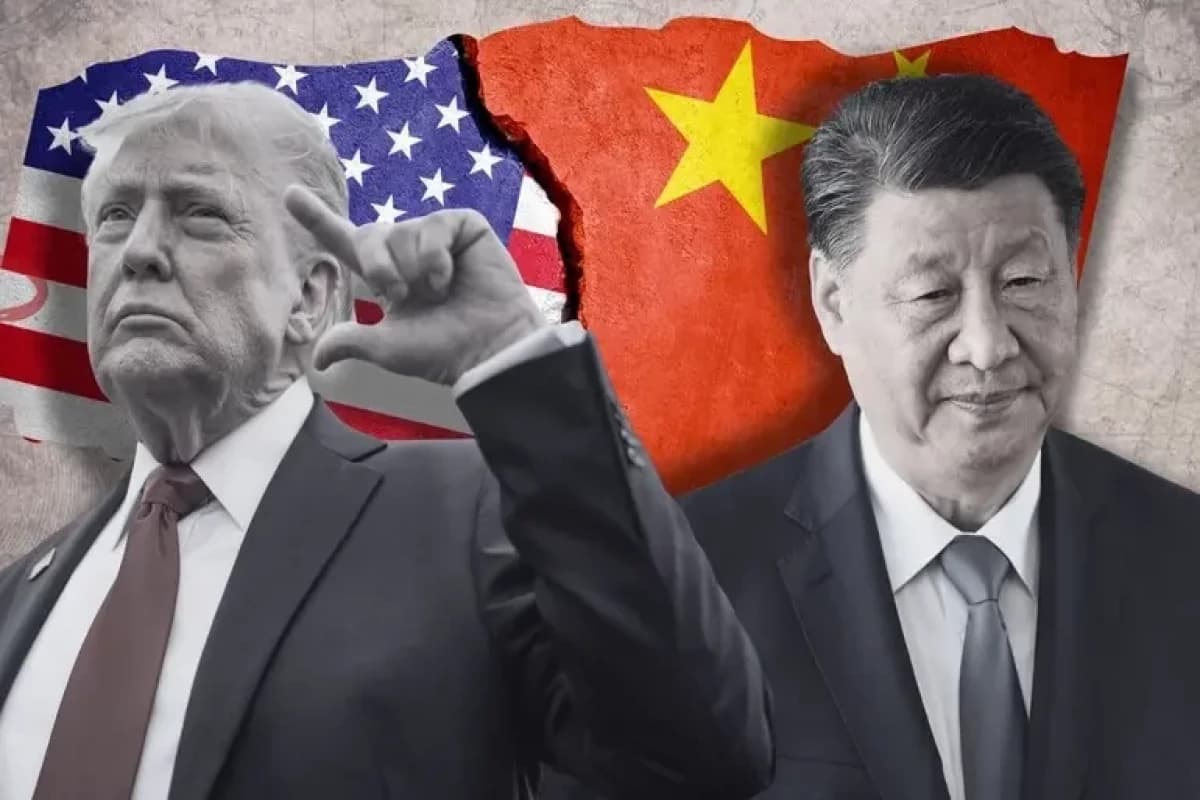
The strategic confrontation between the United States and China on the example of Latin America
"Strategic Confrontation between the US and China as Exemplified by Latin America: A Brief Overview," an article by Musabey Babaev, Director of the "Strategic Thinking" Student Diplomacy Center, has been published on the Vesti.az news portal. Link: https://vesti.az/v-mire/strategiceskoe-protivostoyanie-ssa-i-kitaya-na-primere-latinskoi-ameriki-situaciya-583705